


The College of Engineering & Computing (CEC) had outgrown its old website. While the visuals were strong, the website had become cluttered with unnecessary pages, broken links, accessibility gaps and a confusing user experience. Over time, the college's digital footprint had grown too large, expanding without a clear plan.
With the opening of Innovation 1, growing research expenditure and rising national recognition, CEC needed a website that reflected its momentum.
Project challenges
Normally, researching, designing and building a new college website can take several months, sometimes even up to a year. Partway through our research and subject matter expert (SME) interviews, we had to drastically speed up our timeline and move into design and production ahead of schedule.
We now had 10 weeks to build and launch the website in time to support a leadership change and prepare the college for its next stage of growth. With a shortened timeline, there was no room for delays. Every decision had to be made quickly and with care.
The project presented significant challenges in scale and structure. During the research phase, we discovered that every school within the college operated its own website, separate from CEC. Each academic department maintained its own faculty listings, degree program pages, news, events and more.
Rather than simply building a new website, the project evolved into a full digital transformation. To achieve this transformation, we had to:
- Audit the original CEC website and the individual department sites, totaling several thousand pages
- Consolidate the department websites under the main CEC website and create a process for migrating additional content in the future
- Create a faculty and staff profile template and build more than 250 profile pages
- Design and build a program template for all 37 degree programs
Clarifying the project goals
The project’s challenges directly informed our overall goals. We needed to build a website for CEC centered on usability, scalability and long-term growth.
The project focused on six core goals:
- Give CEC a professional, modern look that aligns with its national recognition and the FIU brand
- Increase traffic to degree programs
- Make information easier to find and explore, especially via search engines and AI tools
- Centralize student resources for simpler access
- Highlight faculty and student research, awards and patents
- Build a structure that allows existing CEC sites to integrate with the main website in the future
These goals provided a clear roadmap for the project. Every design choice, content decision and technical solution had to support these outcomes.
The 10-week project plan
With clear goals in place, the team created a focused 10-week plan covering content, design and development. Every member of DigiComm played a role in launching the website on time. Instead of following our usual linear process, we optimized workflows and collaborated closely with CEC to meet the tight deadline.
The content strategy followed three simple steps: research, writing and editing. With limited time to follow up with SMEs, we relied on initial research, past projects and best practices to create clear page layouts, simple navigation and a logical content structure.
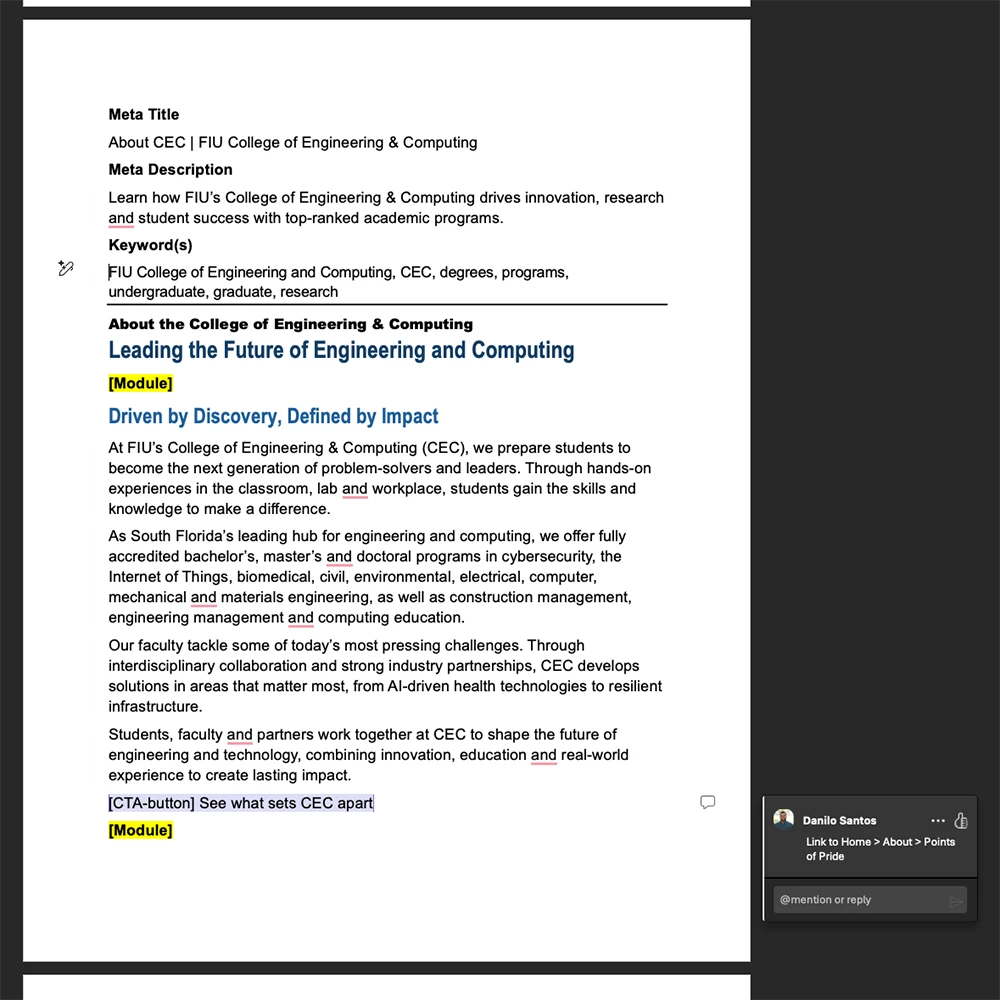
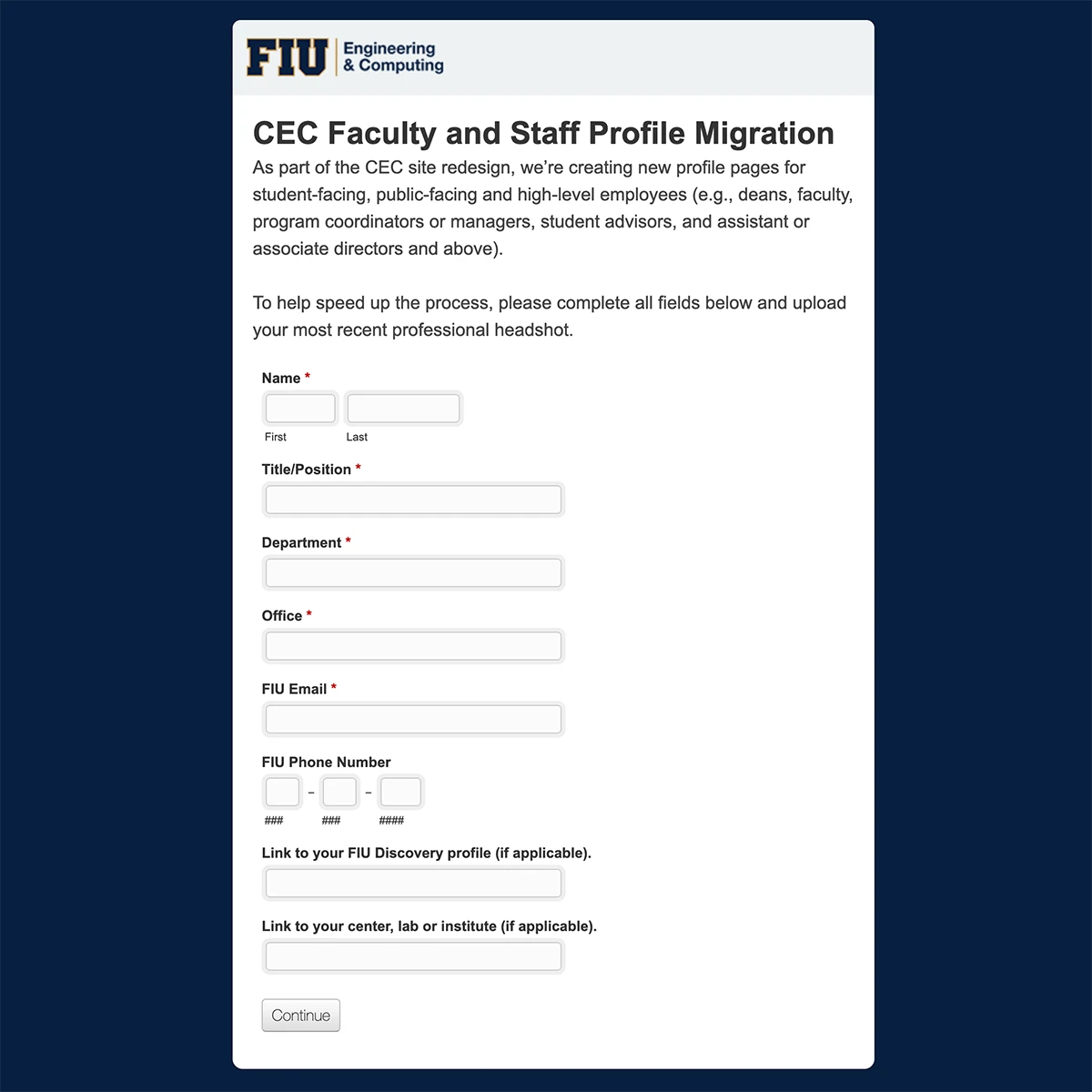
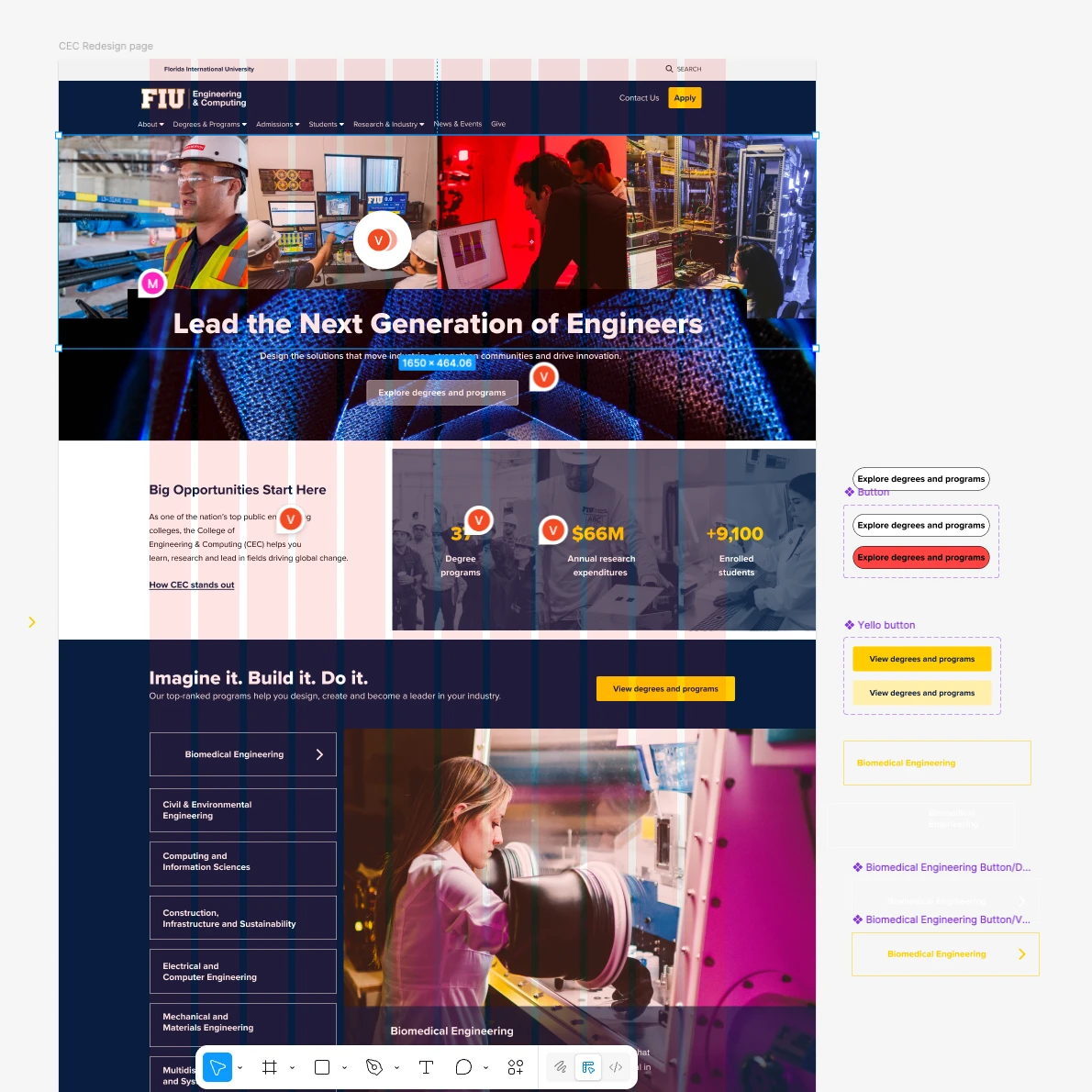
To keep the project moving quickly, we brought design into the process early, building the site section by section as copy became ready. We created flexible templates and forms to make it faster to produce hundreds of faculty profiles and dozens of academic pages. This approach ensured visual consistency across the website while making future updates faster and easier.
Strategic content decisions
Every major template and page type was designed to support recruitment, improve usability and establish standards for managing and maintaining content across the college.
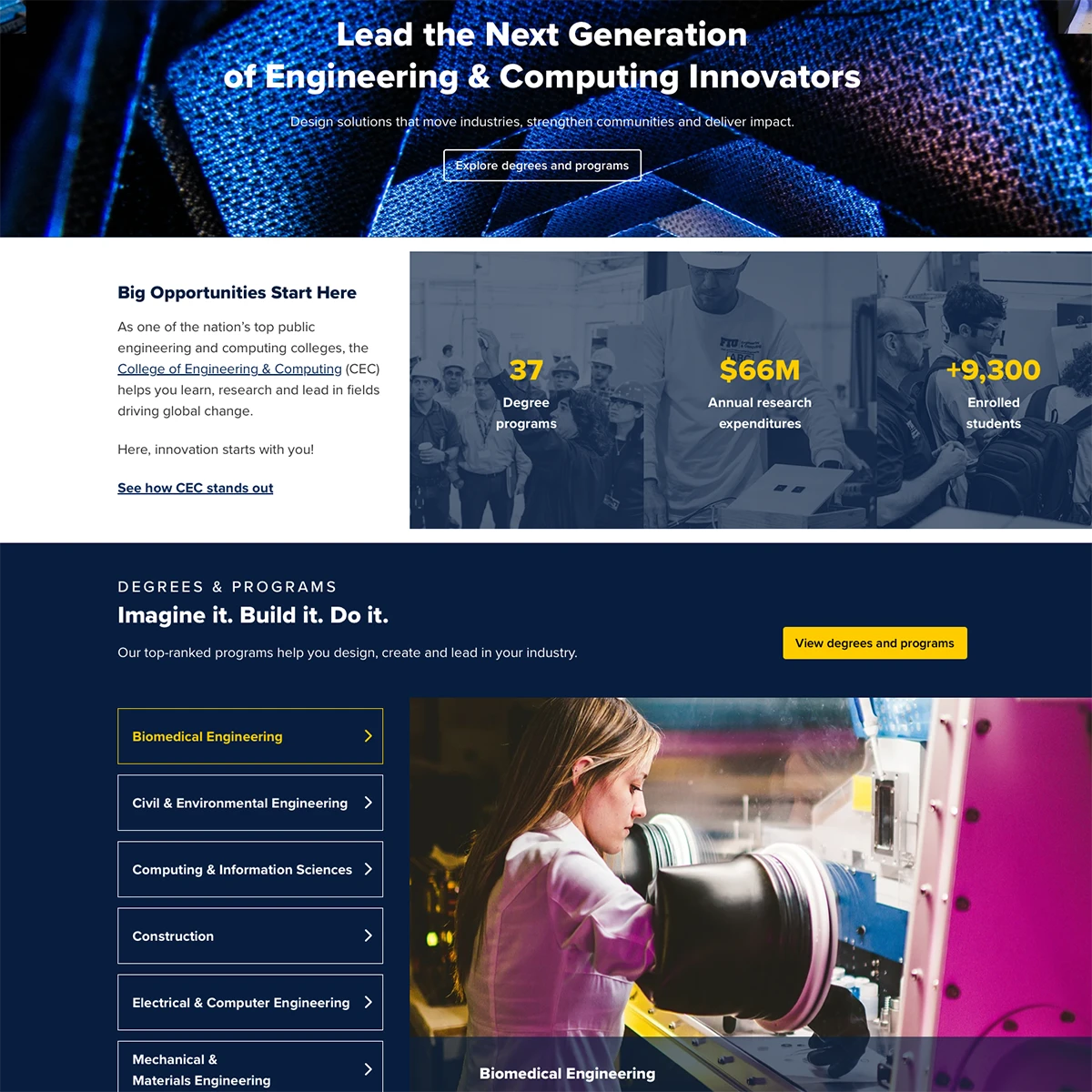
The homepage was designed to bring the college’s scale and impact to the forefront, highlighting degree offerings, research expenditure and student enrollment. A custom program module allows users to sort degrees by specialty, helping them find relevant academic options faster while minimizing extra clicks.
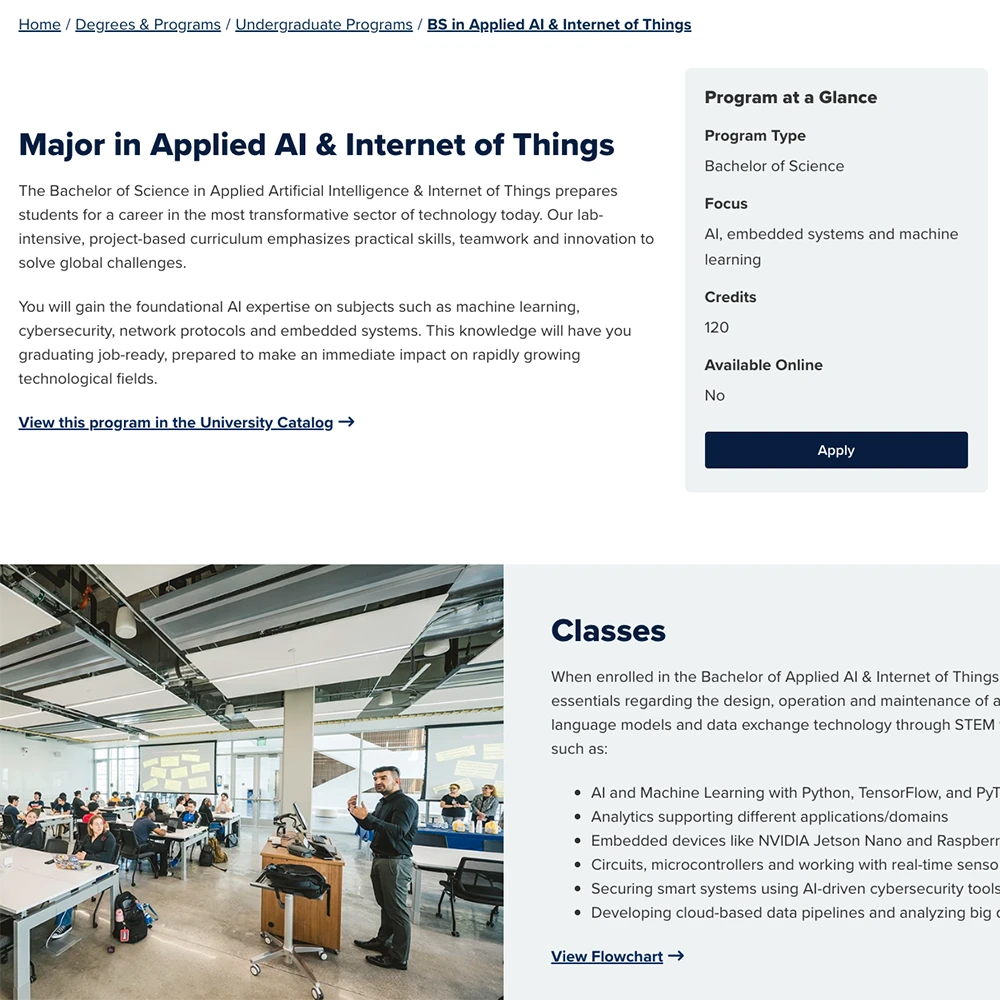
Program pages were standardized to present critical information at a glance, including degree type, credit requirements, tuition and format. Each page also connects users to related programs, helping prospective students evaluate academic pathways more efficiently.
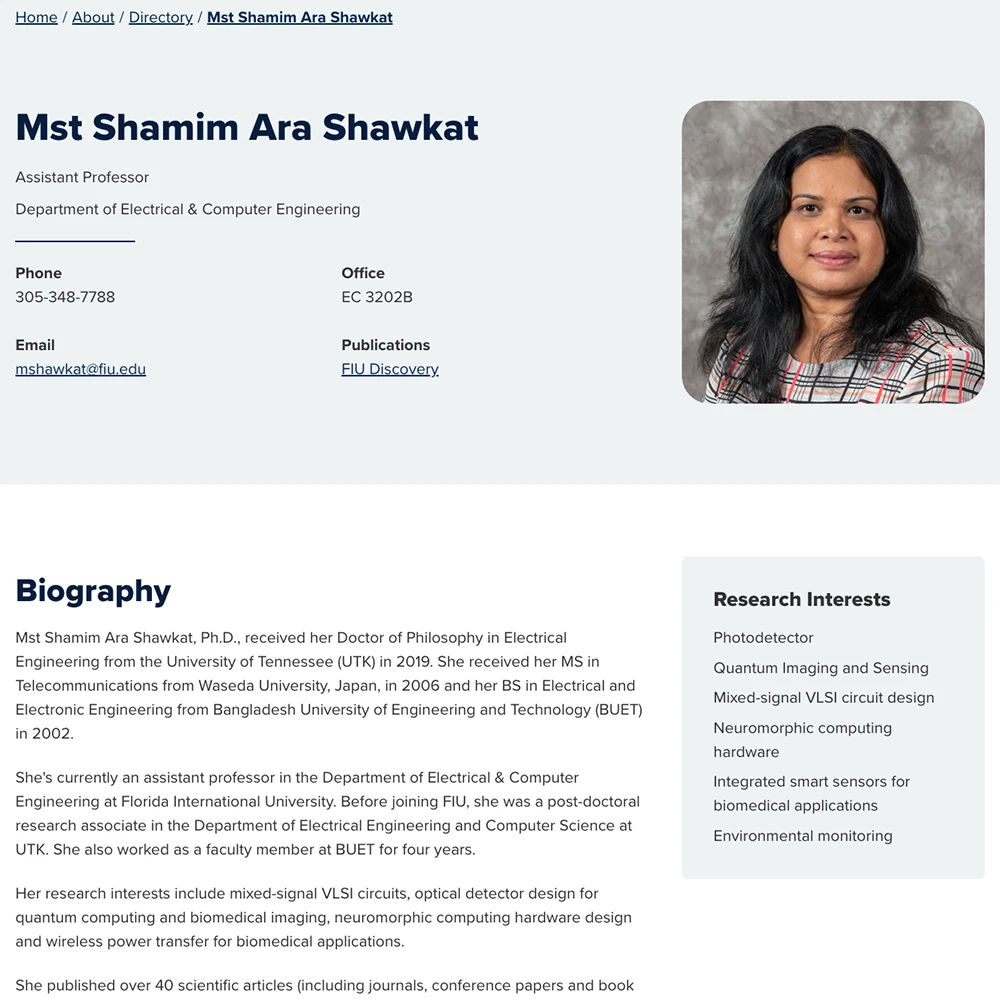
Faculty profiles were redesigned to increase research visibility and encourage collaboration. Direct links to FIU Discovery, lab websites and clearly defined research interests create a stronger bridge between faculty, media and potential research partners.
Academic department pages were significantly streamlined, shifting program and faculty listings to centralized lists. This centralized model eliminates duplicate content, simplifies updates, reduces the risk of outdated or inconsistent information and transforms a divided web presence into a unified website, while still allowing departments to focus on their distinct strengths and identities.
Early impact
User experience guided every decision. We restructured the site to make high-value content easier to find. Degree program pages, once buried in secondary navigation and on other websites, are now accessible from the main navigation, reducing the clicks required to reach one of the website’s most visited sections. We also unified the college directory, removing outdated and duplicate profiles to create a single, reliable source of faculty and staff information.
The new website strengthened CEC’s online presence, supported recruitment efforts, increased visibility for research and achievements and positioned the college to compete more effectively among top engineering institutions.
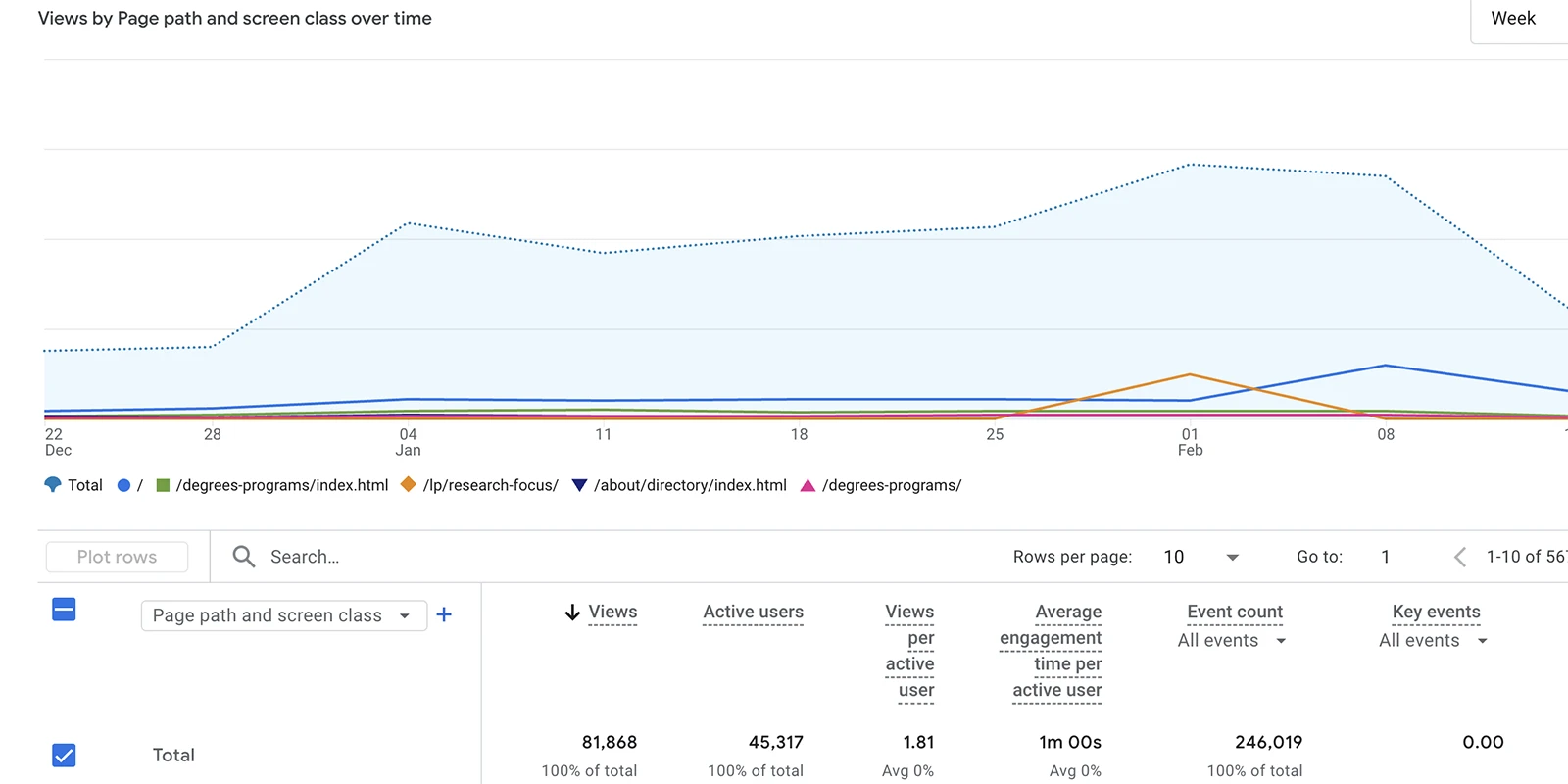
While long-term performance metrics are still being evaluated, the website already provides a strong foundation for usability, scalability and future expansion.