
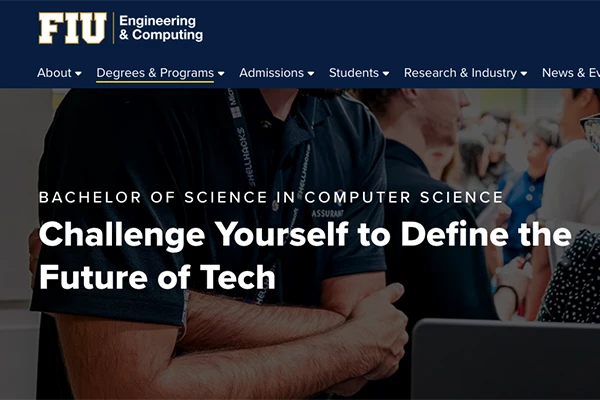
Case Study: FIU’s Bachelor of Science in Computer Science
We’ll be using the College of Engineering & Computing's Bachelor of Science in Computer Science program page.
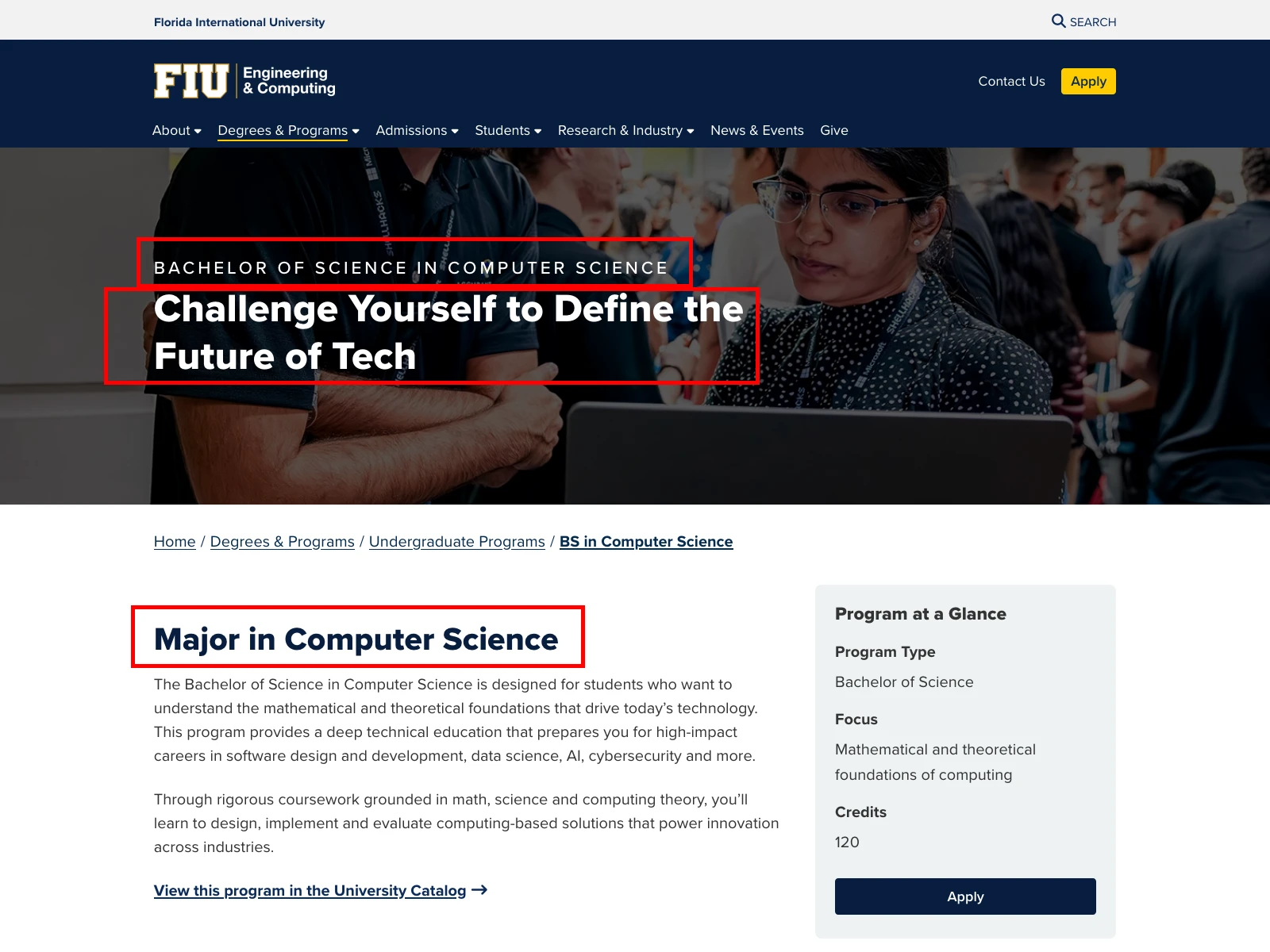
The program page has three heading components:
- Pretitle (H1): Bachelor of Science in Computer Science
- Banner Heading (H2): Challenge Yourself to Define the Future of Tech Page
- Heading (H2): Major in Computer Science
For the most part, we’re discussing the banner and page headings, rather than pretitles and H1s. Keep in mind that headings don't exist in a vacuum and should always be considered in relation to one another.
The Four U's
There’s no correct way to write a good heading. It ultimately boils down to your users' needs and your experience. That said, you can use the Four U's as a framework to get started.
Good headings are typically:
- Unique
- Useful
- Ultra-specific
- Urgent
Unique headings make your page stand out
Everything on the internet, from program pages to news articles, is competing for page views and engagement. A strong heading goes a long way in making your content stand out from the ocean of competitors.
It doesn't have to be complicated, either! FIU's BS in Computer Science uses just one line to encourage students to "Challenge Yourself to Define the Future of Tech." Taking a more poetic approach certainly helps the program stand out more than just saying "Get your computer science degree here."

Just like FIU, the University of Michigan's Computer Science program page starts strong with an impactful banner heading. It may be light on details, but it carries a unique vibe that prospective students are likely to remember when searching for programs.
Useful headings explain the why
Why is it important for users to interact with your content? Time, money and effort are valuable resources, so you need to quickly show users why your content is worth it. Usefulness depends on your audience and their expectations. They may be looking for monetary value, personal growth or a fun experience with a strong community.
Usefulness connects closely with uniqueness, because the details that make content stand out should also matter to your audience. Most prospective computer science students already know the degree has strong earning potential, so focusing on the program’s rigor and real-world impact helps it stand out in a competitive field.
Ultra-specific headings make content searchable
If a unique heading helps your page stand, an ultra-specific one helps users find it in the first place. In our case study, “Bachelor of Science in Computer Science” and “Major in Computer Science” include keywords that people commonly search when looking for degree programs.
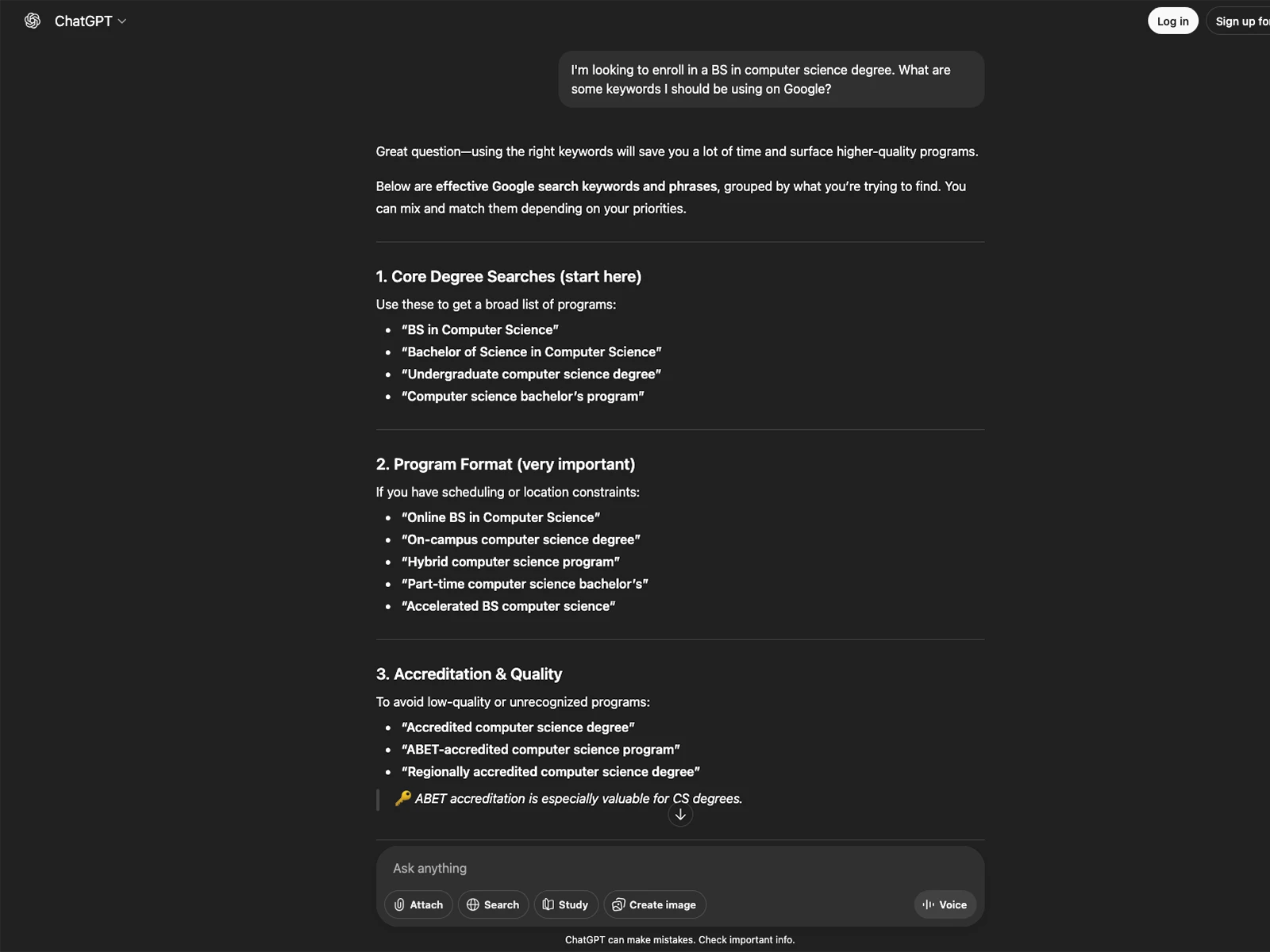
Search engines and AI tools like ChatGPT respond well to specific language, especially as users are relying more on complex questions to conduct internet searches. Using less specific language, like "computer science program," might cause your content to get lost among other search results, where it might never be found.
Urgent headings get users to act
By now, users know what your content is, why it matters to them and where to find it online. All that's left is getting them to do something—enroll, donate or click a big, shiny button. Headings play an important role in encouraging action, even when they're indirect with their language.
You can be direct, telling users something like, "Sign up now and enjoy 10% off!" You can also take a more subtle approach, like the BS in Computer Science, which tells prospective students to "Challenge Yourself to Define the Future of Tech." While less direct, it encourages action just as clearly as “Sign up now.”
Now what?
As part of your regular content audits, it's always a good idea to go back and revise your old headings to follow current best practices and new SEO trends. You may be surprised at how many pages could use updated headings or, even more surprisingly, have no headings at all!
If you have any questions about revising your content strategy process, don't hesitate to reach out to the DigiComm team at digimaint@fiu.edu.