
When brainstorming ways to expand your team's web presence, it's important to remember that websites are just one of many options. Microsites, landing pages and even leveraging regular web pages can help you reach your goals without wasting resources.
Here are some options to consider the next time you think a new website might be the solution for marketing your upcoming event or new initiative:
- Update existing content
- Build a new page on an existing site
- Creating a new landing page or marketing funnel
- Build a temporary microsite
It might sound surprising coming from "the web team," but sometimes building a whole website isn't the right option. Many FIU websites already have tools in place to promote content like workshops or other events.
For example, if you’re hosting a workshop and your site already features a calendar feed, posting the event to the FIU Calendar may be all you need. There’s no reason to create extra work for your team for something that will come and go.
Use what’s already working
Before deciding if you need a new website or another solution, take stock of what you already have. Sometimes, updating or adding a page on your existing site is all you need.
Not only does this save time and resources, but it also keeps your messaging consistent. Consistency and usability are more important than flashiness.
For example, your team might start hosting regular campus tours. If your project is a part of the regular user experience, then building a Tours page on your existing site might be more helpful than a one-off landing page.
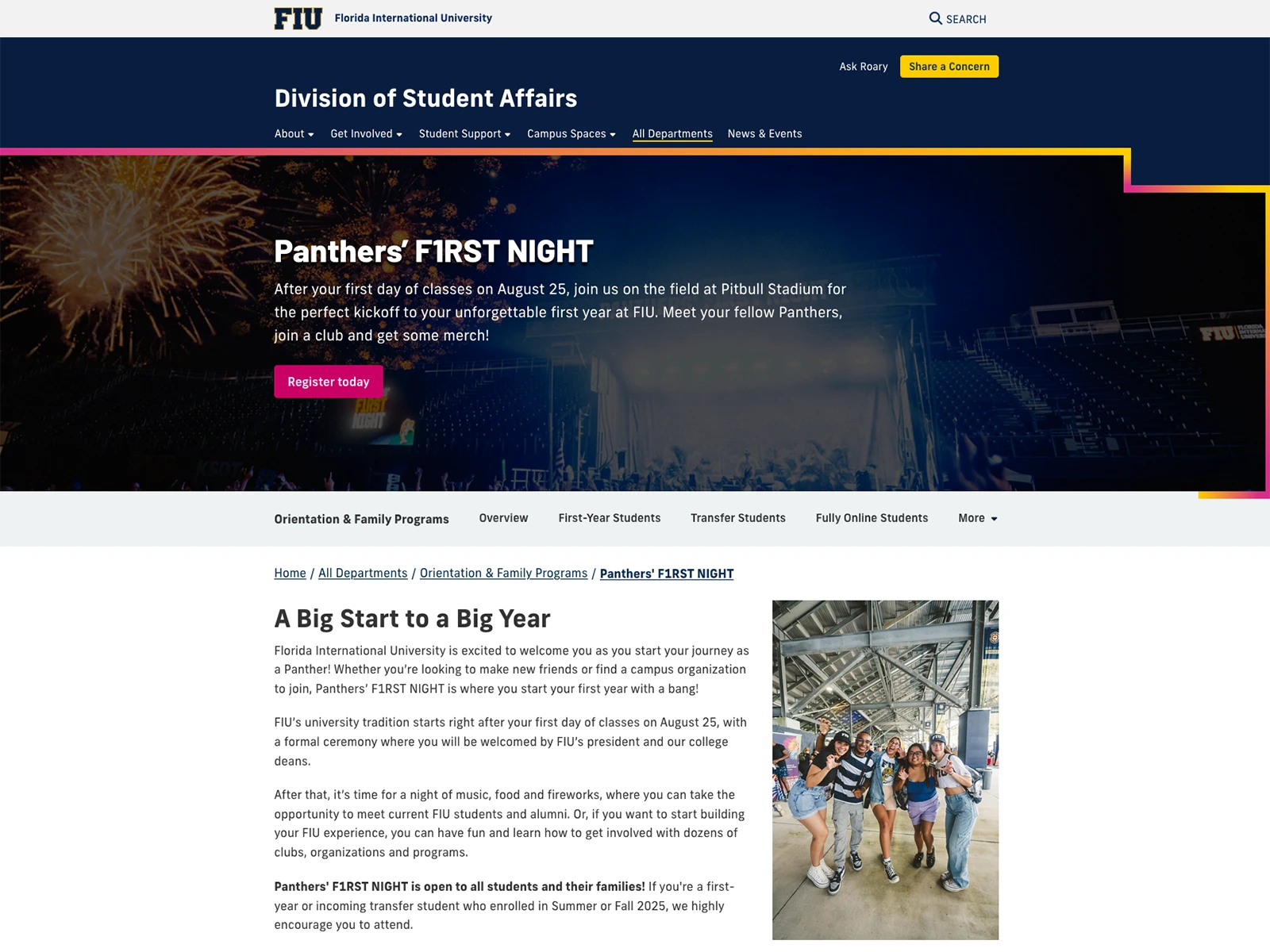
FIU’s Division of Student Affairs does this every year with Panthers’ F1RST NIGHT. Though it’s a major annual event with hundreds of staff and attendees, Student Affairs refurbished the existing page instead of building a new one, providing both prospective and current students a consistent place to find information about the event.
When a website or landing page makes sense
Have you evaluated all your options and decided you still need a new website, microsite or landing page? If so, the next step is choosing the solution that best fits your project.
Scope
Start by thinking about the size of your project. How many different sections and pages will it need? Does it need to be spread out, or can it live in one place? What kind of resources do I have to keep this up to date?
Bigger spaces accommodate more content. That being said, the amount of content you can fit on one page is surprising. Landing pages can be effective at collecting a lot of information in one place rather than having users click around.
Location
Where your content will live matters just as much as its size and complexity. Landing pages and microsites can be great options, but they live outside your main website. Depending on your project, that can be beneficial or detrimental.
Microsites are a great tool for carving out unique spaces separate from your website, perfect for projects that are adjacent to, but not entirely integrated with your unit. But for ongoing services like regular campus tours, a separate site might confuse users. They may assume the tours are temporary or no longer offered.
Likewise, landing pages are sometimes even more isolated, reaching a specific, targeted audience. Creating targeted landing pages can really boost traffic, but their specific construction might make it harder to reach a general audience, which is often the goal of our digital content.
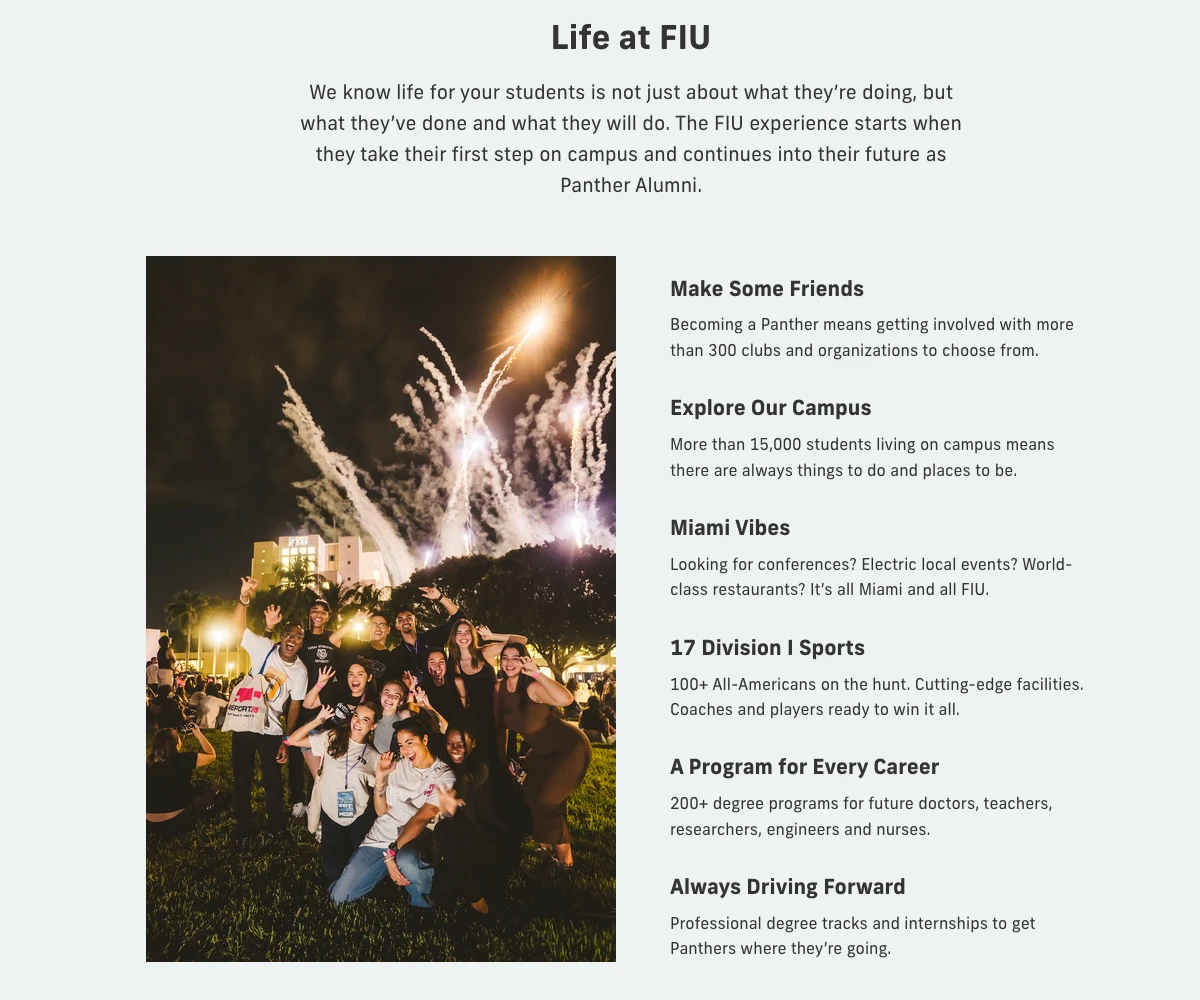
FIU Admissions' High School Counselors landing page is a good example. That page is aimed at a very specific audience and does a great job of targeting them. Notice small details like the language used; "Your students," is tailored to the needs of reaching high school counselors. Those details might be less effective with a general audience, which is why they chose a landing page for that specific project and audience.
Longevity
How long do you expect this project to be active? Having a clear idea of a project's lifespan translates to smart allocation of FIU's digital resources and your own team's efforts.
Generally, the longer something is expected to live, the more resources you can put into it. If you're already planning to spend a sizable amount of money and effort over a long period of time, a landing page or microsite can stretch those resources further by improving traffic and user attention.
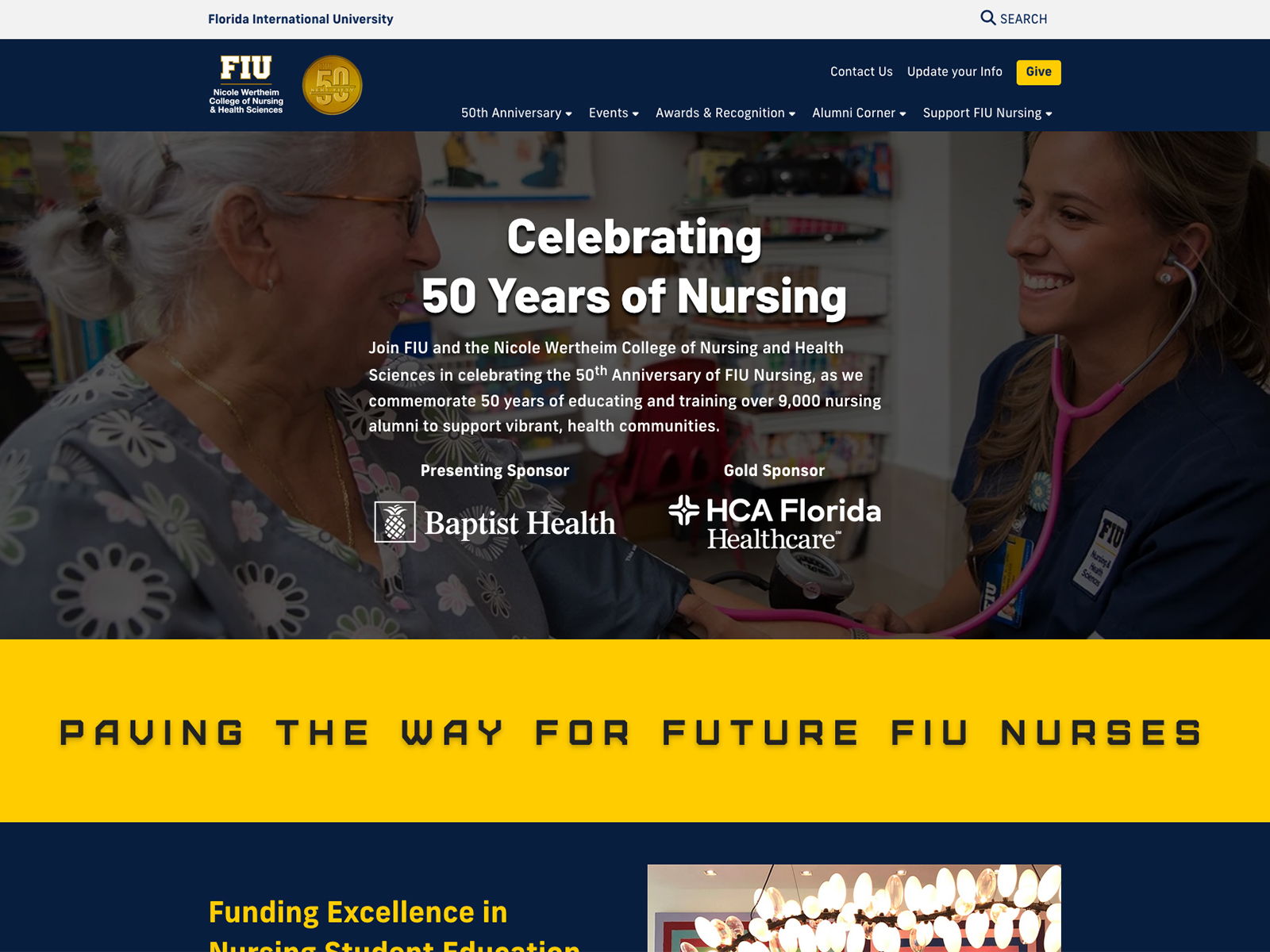
FIU Nursing's 50th Anniversary was a large event that followed this approach. They expected hundreds of attendees with multiple activities over several months and had a dedicated marketing budget. Given its scope and available resources, a microsite was determined to be their best option.
A note about websites
With few exceptions, websites are long-term projects. They are permanent fixtures in FIU's digital landscape. Because of this, you should expect to spend a lot of time and effort maintaining the site. You will also need to make updates each semester after launch, in line with the university’s Digital Standards Policy.
If your project is expected to be small, time-limited or aimed at a narrow audience, consider your other options before setting your sights on a new website.
What's next?
The Office of Digital Communications is here to help you make the best use of your web resources. If you have any questions about how best to scale your digital space to your unit or project, don't hesitate to reach out to our team at digimaint@fiu.edu.