
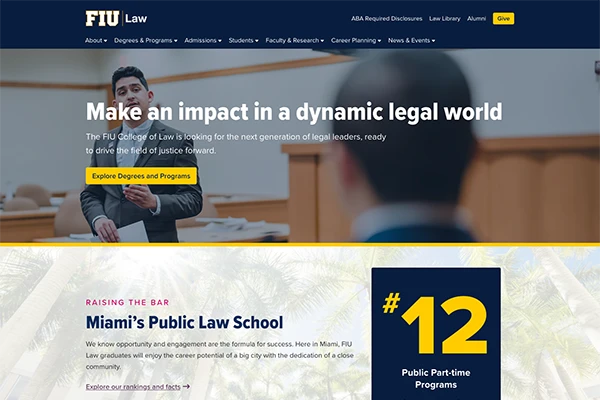
The College of Law's website needed a rebuild. It relied on an older WordPress template that became increasingly unwieldy as the college grew. Despite being a vital information hub for students, faculty and industry partners, pages were difficult to find and lacked a uniform strategy for organization.
When the FIU Law team decided on a marketing push for some of its existing programs, they also decided it was time to refresh and revitalize their college's digital presence.
Challenges
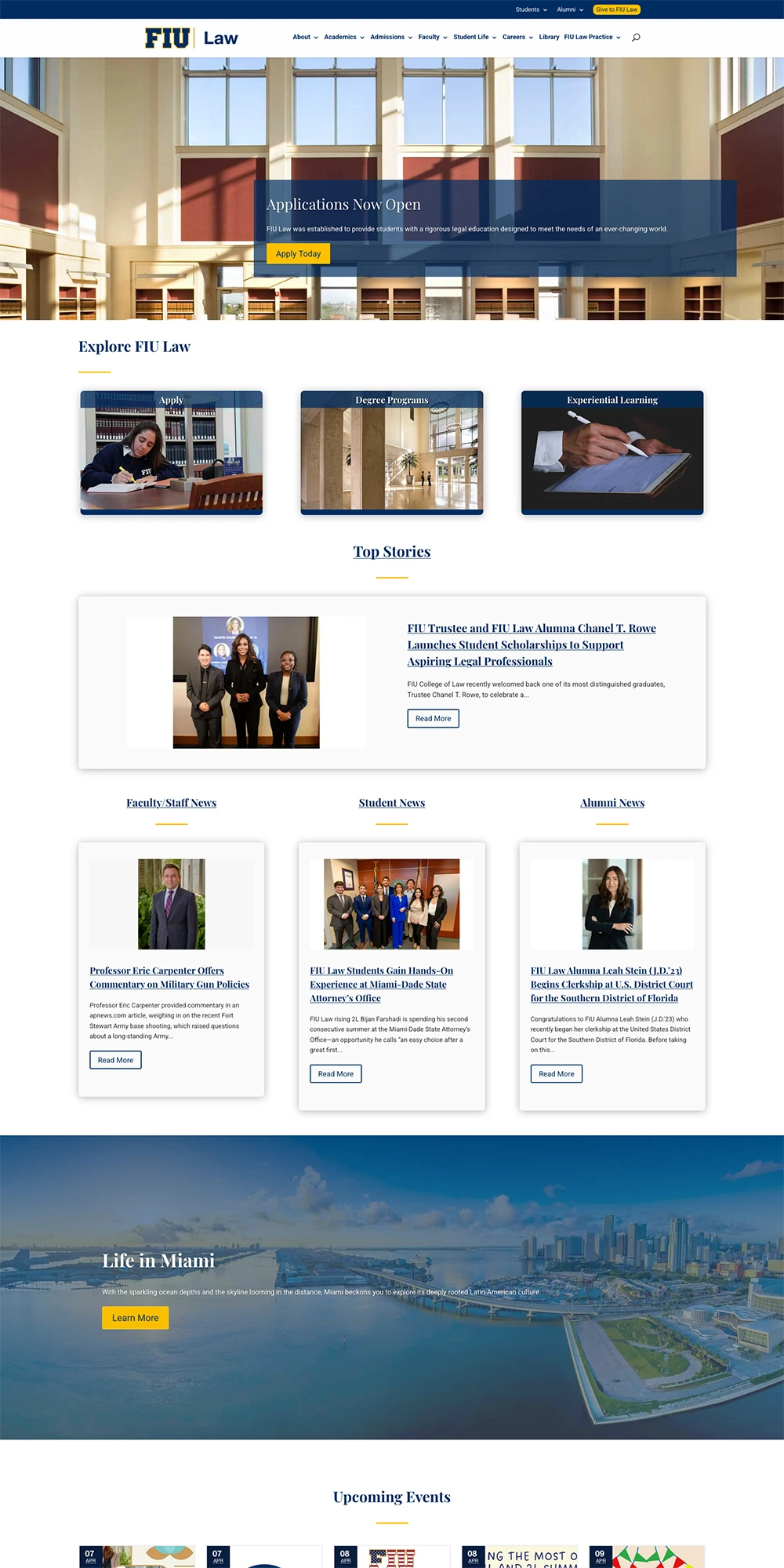
Outdated Website
Initial audits revealed a heavily used website with significant issues:
- Dated or obsolete content with some old pages dating back to 2020 and containing information for inactive programs
- Scattered sitemap of more than 500 pages, many placed in awkward locations (e.g. admissions handbooks at the root level instead of Admissions)
- A thorough, but confusing navigation that split a lot of vital information across many different pages, making use of the site very difficult for the average user
Accelerated Timeline
When the project began in late June 2025, we projected a mid-December launch given the extensive content auditing and redesigning the website required.
However, within a week, the Law team requested the launch be expedited to mid-August, so the website could support a marketing push in Fall for several programs, including a new one for Military Law. The expedited timeline gave us about six weeks from initial research to site launch.
This new timeline required carefully redefining the scope of the project. We sorted out high-priority items due before launch (e.g. program pages) and lower-priority items that could be finished or updated post-launch (e.g. photo refresh). That was critical to the project's end result, which was a complete website with room for post-launch upgrading, rather than an incomplete website missing important pages.
Short of Team Members
While our typical three-person team (one content strategist, one developer and one designer) was available for the project, we had another major, institutional website redesign happening concurrently. This translated to less available time and a bigger need for coordinating schedules to avoid double-booking team members for project tasks.
Goals
As usual, we started with a project brief to establish abstract goals (e.g. "Modernize programs") and concrete goals (e.g. "Get more X traffic to Y programs").
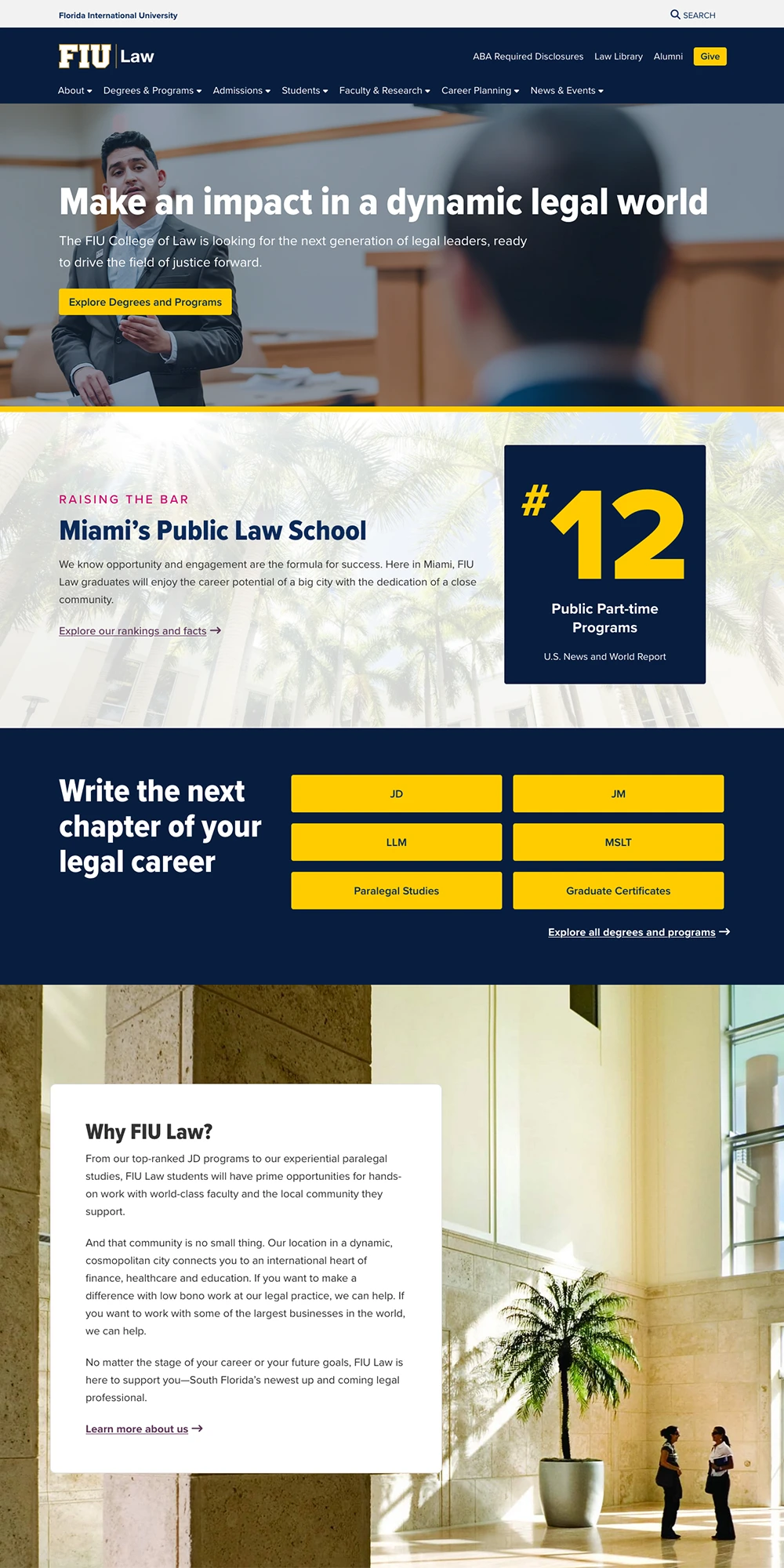
Ease of Use
We needed to reorganize the navigation and ensure all content on the new website was up to date. The navigation was overgrown and confusing. We needed to group pages together more intuitively, ensuring information architecture felt natural to all users. The old website also contained plenty of dead (i.e. inactive, not expected to be relevant again) or outdated content (i.e. needing rewrite).
Refurbish to Modern Standards
From design to UX, the old website needed serious refurbishment. It was operating with an old color palette and web layout that did not adhere to our current branding. From a pure UX standpoint, it was also partially inaccessible, with smaller fonts and a mobile-unfriendly design making it non-compliant with FIU accessibility standards.
Unique Digital Identity
This was actually two goals folded into one:
- Make the new website unique for FIU
- Make the new website unique among law school peers
While bringing FIU Law's website into compliance with the newest brand standards, we also needed to distinguish it from other FIU college websites.
In Florida and nationally, FIU Law was (and is) also a prestigious college, embracing its rankings, recognition in the legal community and formal achievements of its students and faculty. Our new designs had to incorporate this prestigious air and give FIU Law a space suitable for its growing national stature.
Increased Traffic to Flagship Programs
Standardization is always a priority when it comes to program-related content within projects. That being said, our standardized templates still had to serve as marketing assets. Marketability across all programs was as much of a priority as universal usability.
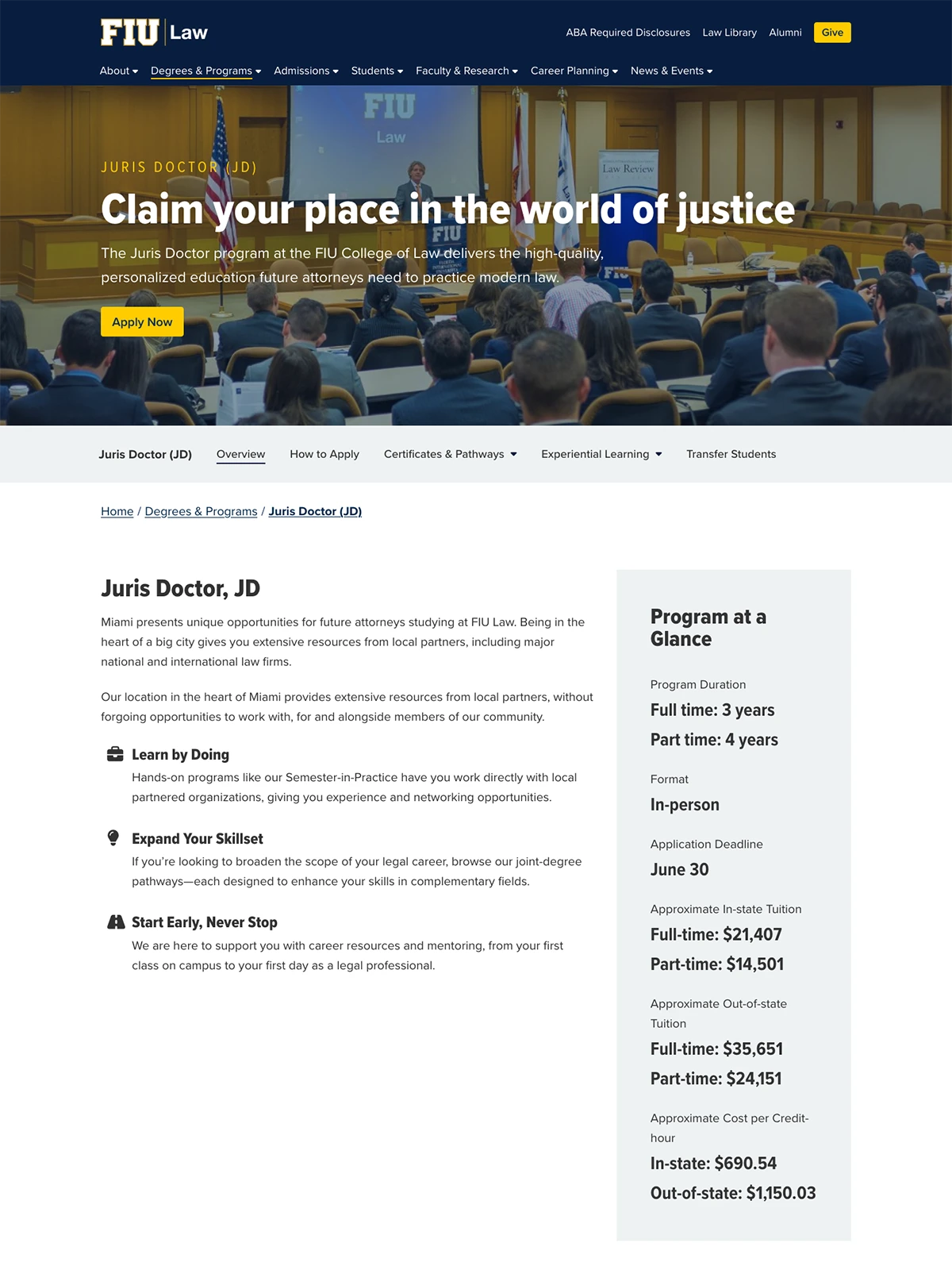
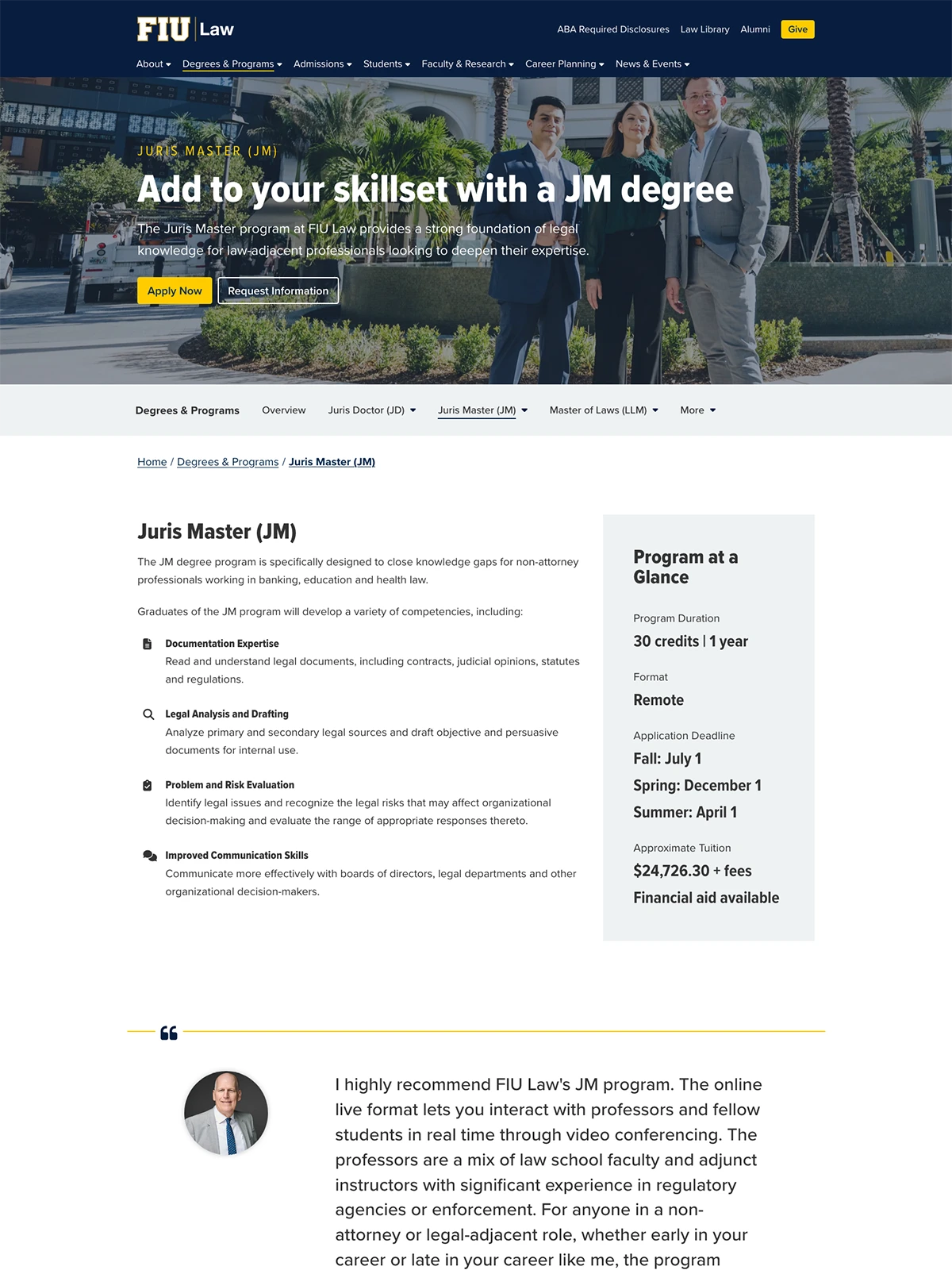
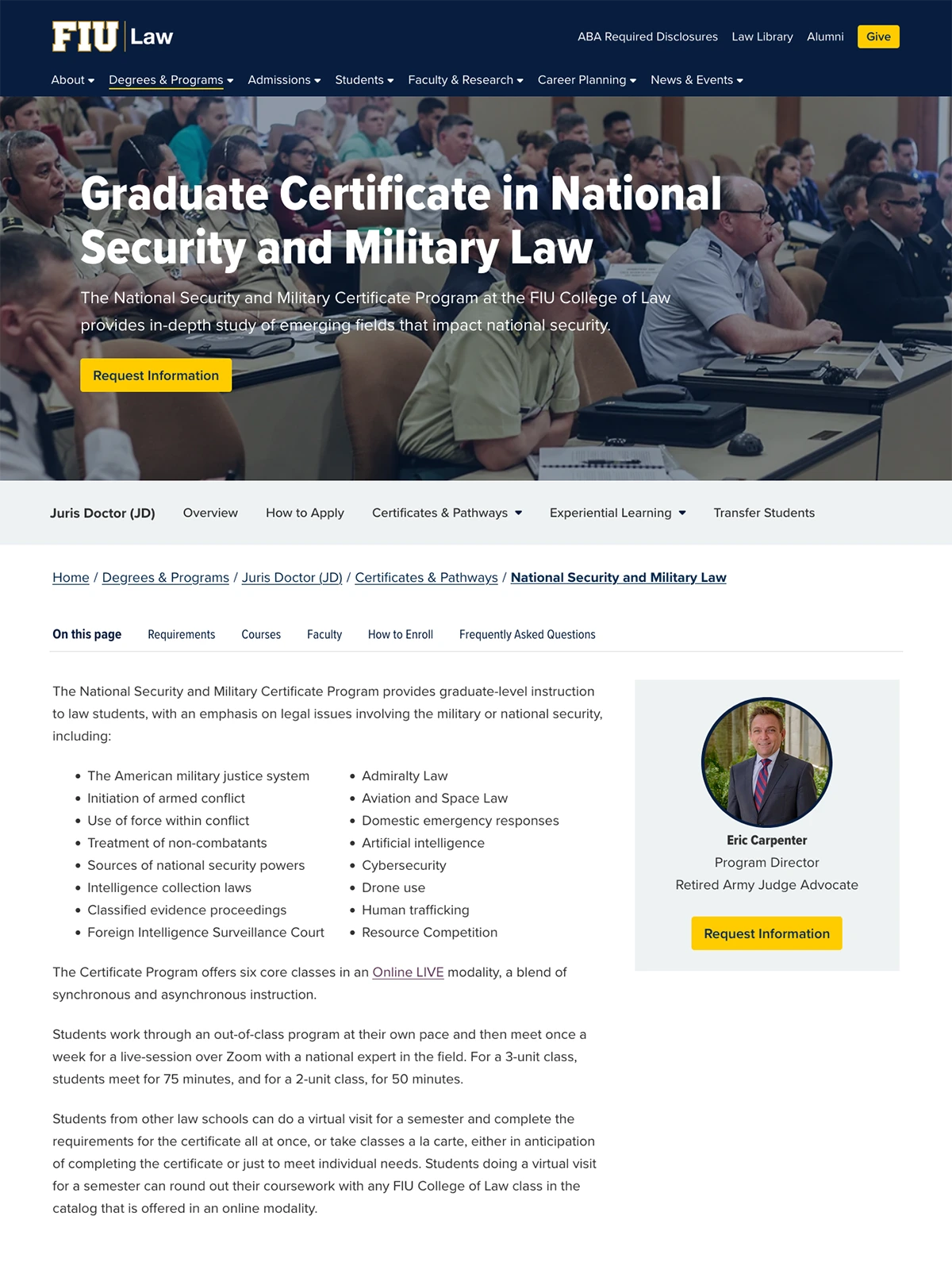
The JD program took priority, but FIU Law also had revenue-generating programs they wanted to promote, including a brand-new Master of Science in the Law of Technology. The push for a new website was driven in part by a push for more program-first marketing by the College of Law team.
Buy-in from College Stakeholders
These goals would also need to be achieved while getting buy-in from College of Law unit leaders, who were concerned about potentially losing any information during the transition. Their input for curating content was valuable, but we also wanted to avoid involving too many people in the revamping process and introducing unnecessary workflows or bottlenecks on such a short schedule.
A key part of the planning and drafting processes was remaining in contact with marketing personnel from FIU Law and getting stakeholder goals communicated to us concisely and effectively. Not every decision was catered to fulfilling one of their goals, but certain "victories" created the buy-in necessary to convince them of another decision's potential noncompliance (e.g. Flyers being posted on certain pages).
Project plan
Audited Thoroughly to Identify Dead Content
The expedited launch meant we had little time to allow for multiple rounds of feedback and revision. To get as close as possible to a finished product with the first drafts, we conducted an OUCH audit of the existing website.
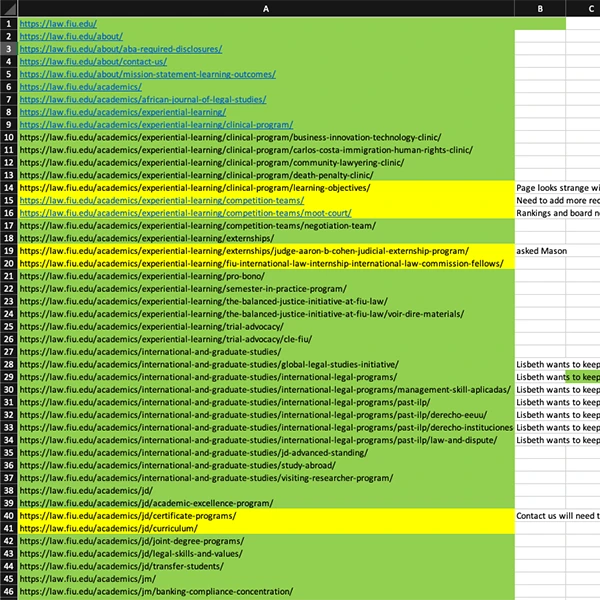
Our OUCH document was focused on sorting all existing content into four categories:
- Outdated: Actively used, needs to be rewritten
- Unnecessary: Dead content, needs to be deleted
- Current: No edits, needs to be copied
- Have to Write: Missing content, needs to be written
Streamlined Process from Draft to Final Staging
The expedited launch meant we had little time to allow for multiple rounds of client feedback. We briefed the College of Law team on these limitations and agreed the priority would be to get as close to a finished product as possible with the first revisions.
We scheduled a firm launch date and regular check-in calls to review set milestones, sending bulk "blocks" of content to the client for review while our team concerned itself with design and development tasks.
Maximized Productivity Through Asynchronous Work
A vital part of the project plan was ensuring every team member (or collaborators at FIU Law) had something to work on at all times. The project timeline prioritized items requiring significant design or development (like the home page and custom news feed). During design and development, all pages that could be copied wholesale or only required minor copyedits were immediately drafted on the new website, with very outdated pages being rewritten for later hand-off.
They're Looking for a Click, Tell Them It is Likely
Analytics are still being pinned down, as page consolidations and deletions make it difficult to conduct one-to-one comparisons between the old and new websites.
That being said, the new website's traffic has converted into 1,600 total prospective student requests for information to date, including more than 800 for their revenue-generating programs. This number is all the more impressive given FIU Law's total yearly headcount of 600 students.
The project wrapped up with the College of Law sporting a unique, modern and search-optimized digital space, with a streamlined navigation and high-quality program pages. In one swoop, FIU Law was folded into the greater FIU digital ecosystem, with all the accompanying branding and quality.